Patchouli… one of the most misunderstood ingredients in perfumery, we think.
Lots of people think they hate it, but what they might not know is that without it, many of the
most popular perfumes in the world wouldn’t exist!
So what is patchouli?
Part of the same family as mint, patchouli is a perennial herb native to Southeast Asia that has been
used in perfumery for thousands of years. Patchouli oil is usually extracted via steam distillation of the leaves.
Patchouli is one of those versatile raw materials that really changes depending how it’s blended and what with.
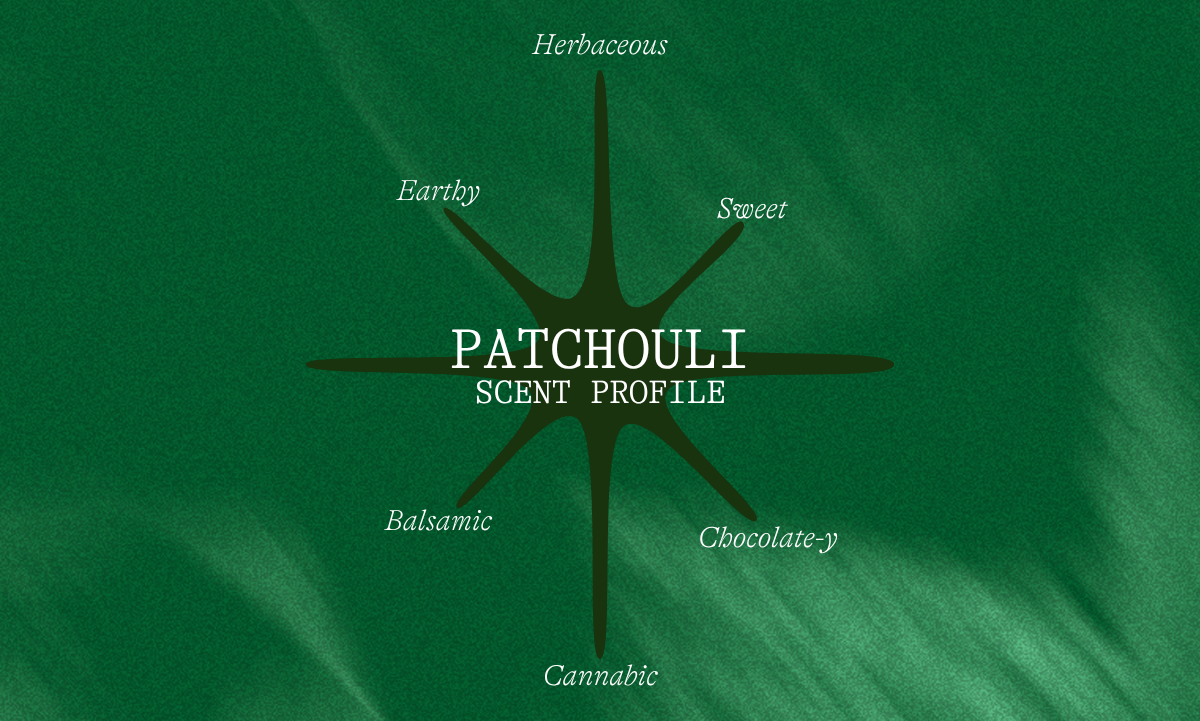
By itself, in its raw form, it can smell sweet, earthy, musky, woody, balsamic, cannabic and/or even chocolate-y!
When paired with other notes, different facets of its aroma profile can be amplified. It’s usually used as a base note,
as it is super long-lasting and therefore improves longevity.
Why do people seem to dislike patchouli?
A lot of people think of patchouli as THE emblematic scent of the hippy movement of the 60s and 70s,
which saw the rejection of Western consumerism and the embracing of more holistic and natural aesthetics,
oftentimes appropriated from the East (think: The Beatles after they came back from India).
Patchouli oil became the scent of the youth, of rockstars, of trippers and activists alike.
Its association with such figures earned patchouli an association with being “dirty” or “unwashed” –
problematic on multiple levels, we think – most of all because it erases thousands of years of perfumery tradition and culture!
In Ayurveda (an Indian system of holistic medicine that dates back up to 5000 years), patchouli is utilised for its soothing,
grounding and rejuvenative properties. It has also been used as an insect repellant in Southeast and South Asia for centuries –
the famous Kashmiri pashminas were packed and stored with layers of patchouli leaves to prevent insect damage.
It has also traditionally been used in love and fertility rituals cross-culturally.
At the end of the day, patchouli is one of those perfumery ingredients that is so aromatic and so versatile that it’s probably in the composition of a fragrance that you love, whether you know it or not. And maybe now you’re a little more keen to try it!
SOME OF OUR FAVOURITE PATCHOULI SCENTS